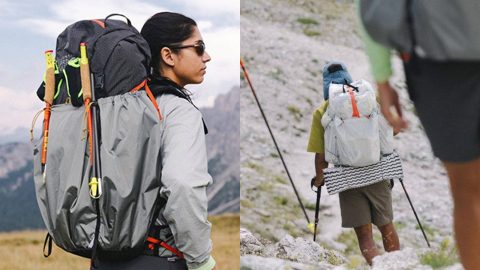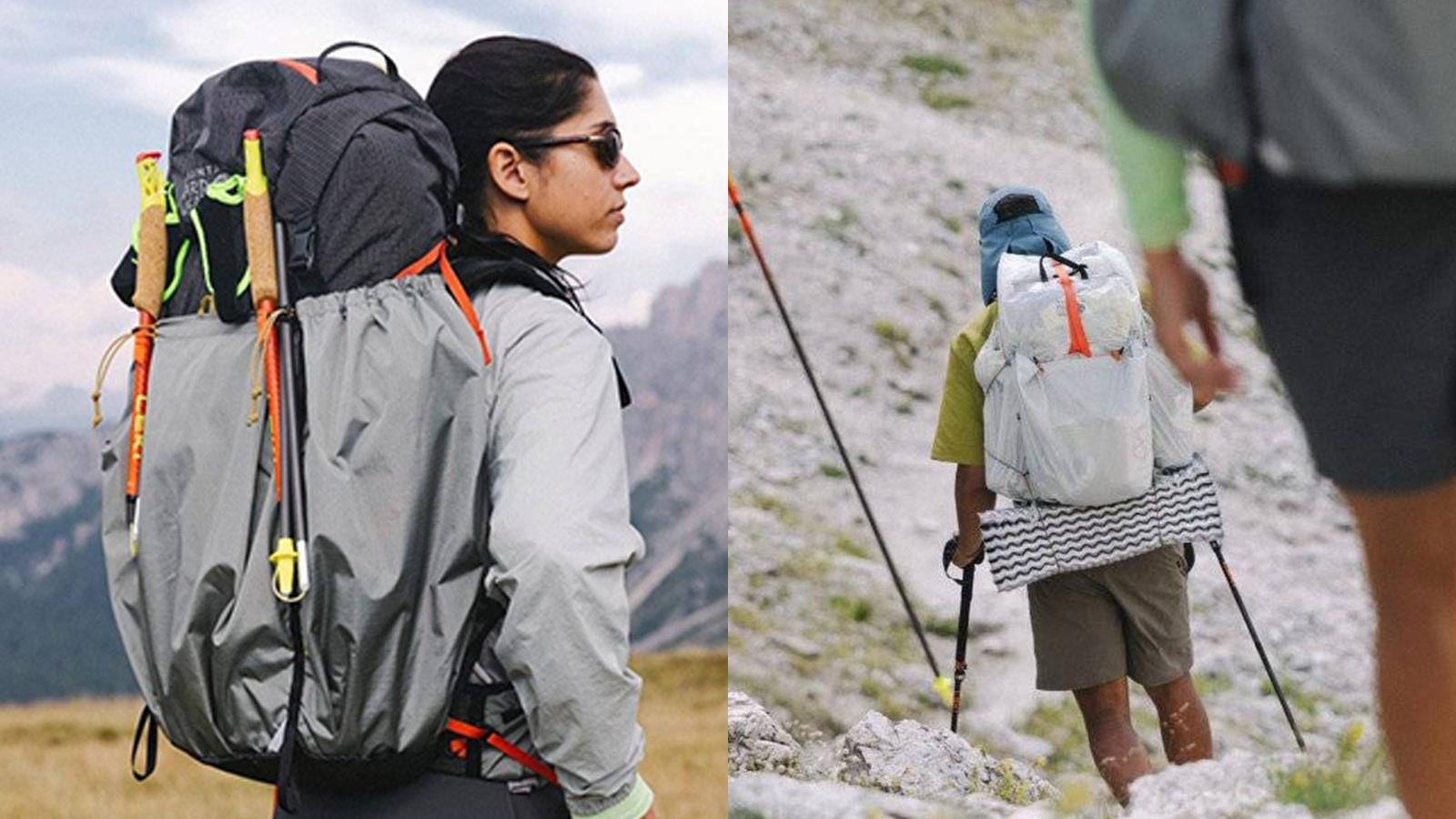
Mountain Hardwear is making a serious play for the ultralight backpacking market with the launch of its new Alakazam and Kazam backpack series. Available in both 45-liter and 60-liter versions, the packs share the same ambitious design language—oversized external storage, vest-style harnesses, articulated hip belts, and modular compression systems—but diverge sharply in materials and pricing. One is a high-tech halo product aimed at obsessive gram counters; the other is a more approachable interpretation of the same concept.
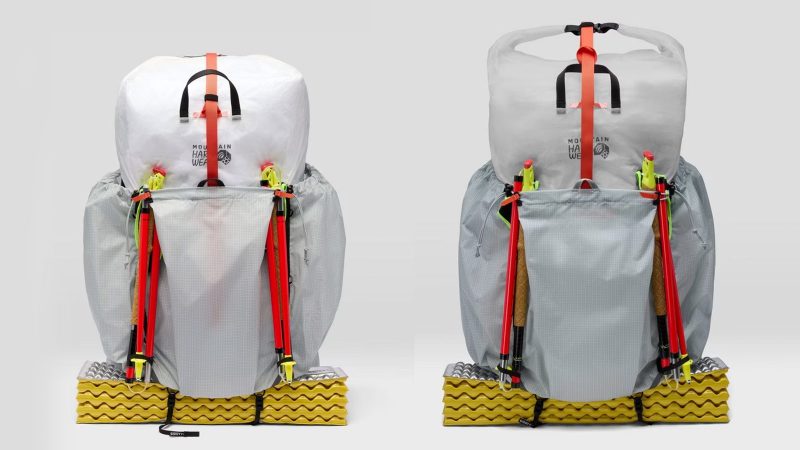
The flagship Alakazam models are built around ALUULA Graflyte, an advanced UHMWPE composite material originally developed for high-performance kite and wing applications. The fabric is exceptionally light, highly waterproof, and resistant to delamination, allowing Mountain Hardwear to create a fully framed backpack that weighs less than two pounds in its 45L configuration. The Alakazam 45 tips the scales at roughly 28.9 ounces, while the larger 60L version adds only about 1.4 ounces despite its significantly expanded carrying capacity. Both models are rated to comfortably haul loads approaching 40 pounds.

The Kazam series uses the same core architecture but swaps the premium ALUULA shell for a more traditional nylon/polyethylene ripstop fabric. That change increases weight by roughly 12 ounces depending on configuration, but it also drops pricing dramatically. The Kazam 45 starts around $295, while the Alakazam 45 commands $575. The difference highlights Mountain Hardwear’s attempt to serve both hardcore ultralight enthusiasts and backpackers who want innovative suspension and storage layouts without venturing into boutique-price territory.
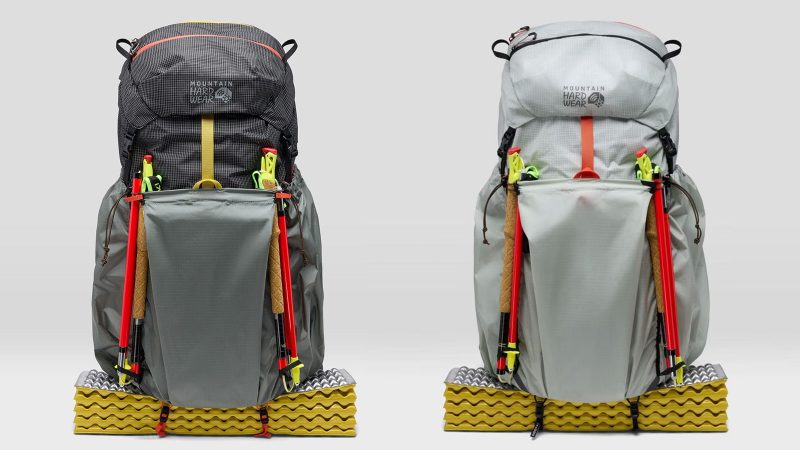
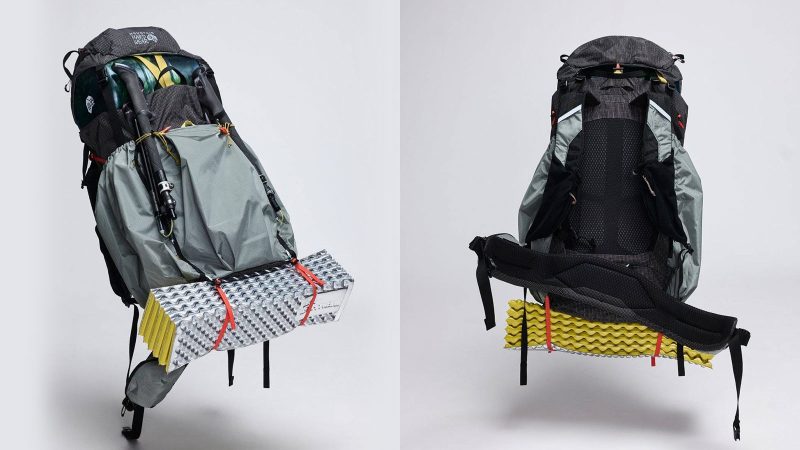
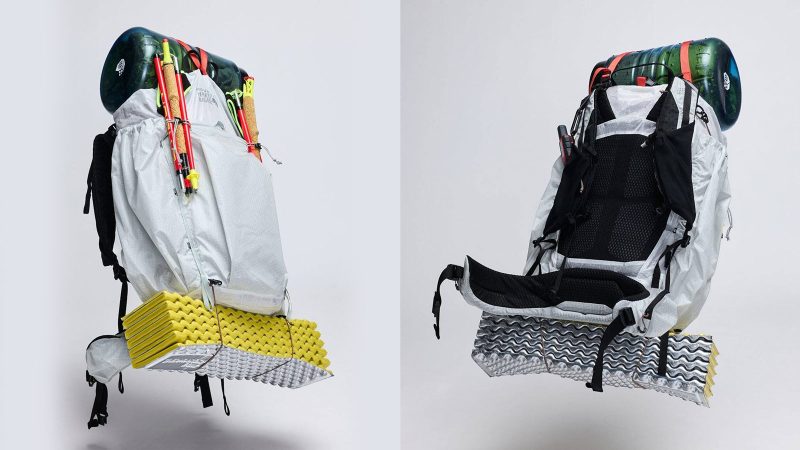
What makes both packs interesting isn’t just the material story. Mountain Hardwear designed the platform around mobility. The articulated “Gait Keeper” hip belt allows the frame to pivot with the wearer’s stride rather than fighting natural movement. Combined with vest-style shoulder straps and the brand’s modular “GiddyUp” compression system, the packs feel unusually agile for their size. On trail, the suspension system reportedly helps stabilize heavier loads while reducing the rigid, torso-locking sensation common in traditional backpacking packs.

Storage is equally unconventional. Massive wraparound side pockets can swallow trekking poles, water bottles, wet layers, or even foam pads. A cavernous front dump pocket handles quick-access gear, while removable top straps and modular lash points make it easy to adapt the pack for fastpacking, thru-hiking, or multi-day alpine missions. The 60L variants in particular blur the line between ultralight backpack and expedition hauler, with some reviewers suggesting the external storage makes them feel closer to 70- or 80-liter packs in practical use.
That said, the design isn’t entirely without compromise. The oversized external pockets can make the packs feel wide and somewhat bulbous when fully loaded, especially on technical terrain. The vest harness layout may also feel excessive for hikers who never intend to move beyond a walking pace. But that willingness to experiment is arguably what makes the Alakazam and Kazam series compelling in the first place. At a time when many large outdoor brands tend to iterate cautiously, Mountain Hardwear appears willing to take genuine risks with suspension geometry, materials, and pack organization.
The Alakazam 45 and 60 are available now for $575 and $595 respectively, while the Kazam 45 and 60 retail for $295 and $315. For backpackers looking for something that feels meaningfully different from the sea of conventional ultralight packs, both series offer an intriguing glimpse at where technical load-carry systems may be heading next.