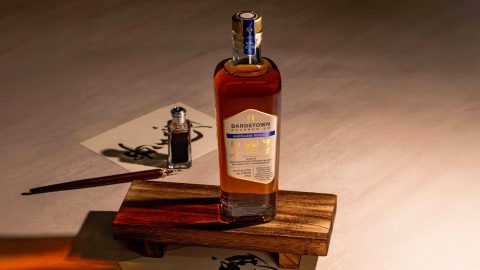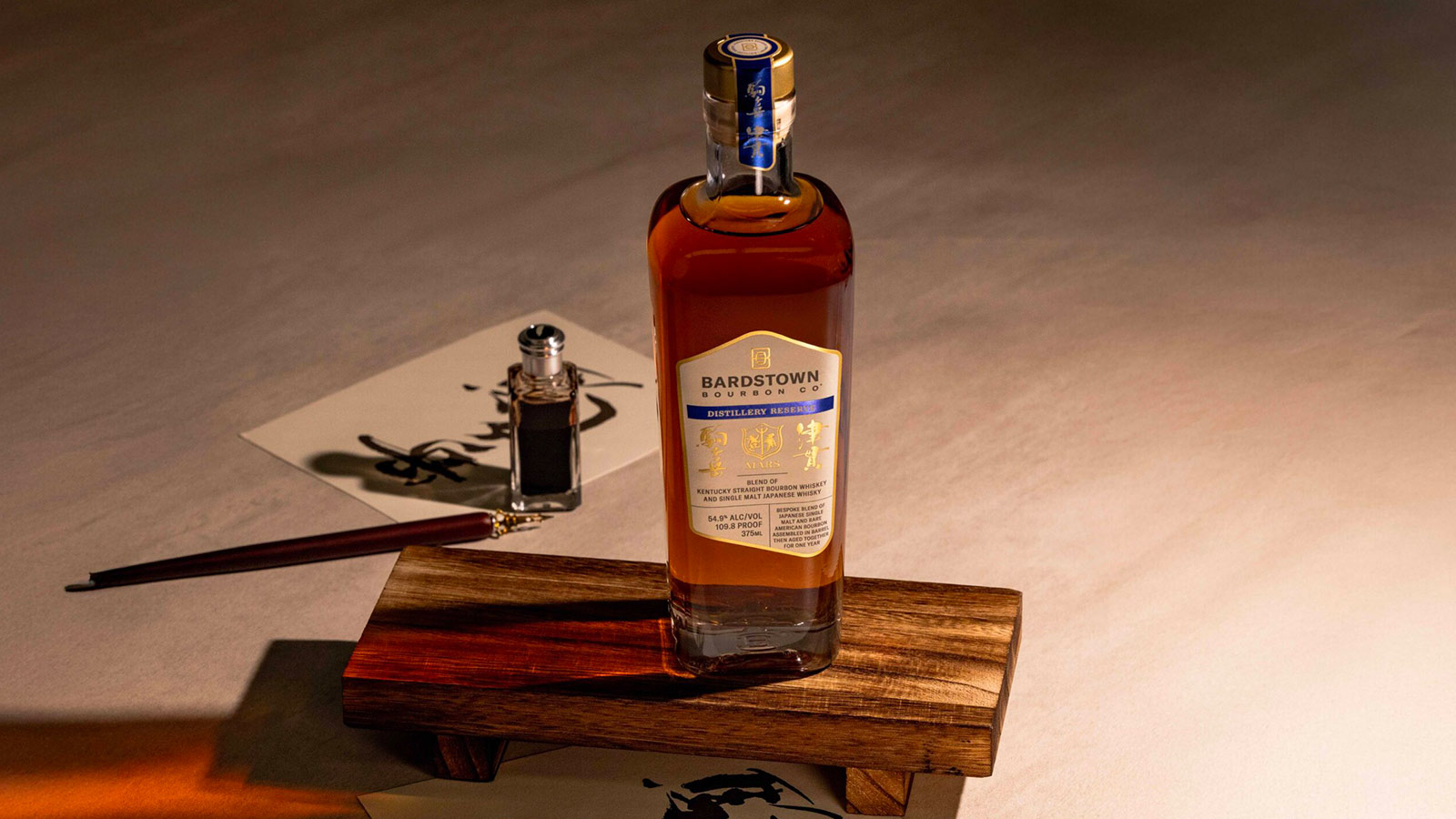
Bardstown Bourbon Company has built much of its reputation on experimentation, but its latest Distillery Reserve release feels more deliberate than novelty-driven. Created in collaboration with Japan’s Mars Distilleries, the new Mars Single Malt Japanese Blend combines mature Kentucky bourbon with Japanese single malts before undergoing an additional year of aging in Kentucky. The result is less a simple fusion and more an attempt to reconcile two distinctly different whiskey traditions within a single bottle.
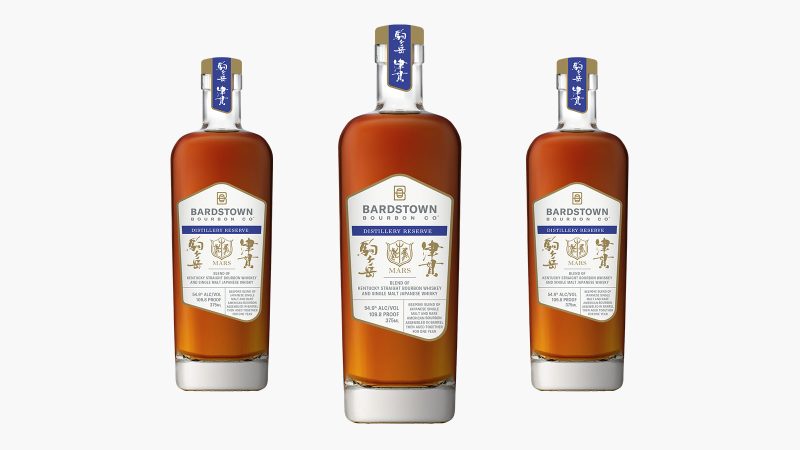
The blend itself is unusually specific. It consists of 69 percent 10-year-old Kentucky bourbon, 20 percent five-year-old Komagatake single malt matured in Umeshu plum liqueur casks, 8 percent 16-year-old Kentucky bourbon, and 3percent five-year-old Tsunuki single malt aged in Sakura wood casks. Bottled at 109.8 proof, the whiskey carries enough structure to preserve the depth and weight expected from mature American bourbon while allowing the more restrained Japanese components to remain identifiable.
What makes the release interesting is how little Japanese whisky is actually required to reshape the profile. The Mars distillates account for less than a quarter of the blend, yet they reportedly introduce floral aromatics, stone fruit brightness, and a subtle sweetness that softens the heavier caramel and oak notes coming from the Kentucky bourbons. The Umeshu cask influence appears especially important here, adding a plum-like lift that distinguishes the whiskey from more conventional American finishing projects.
The decision to bottle the release in a 375 ml format also feels intentional. At $99.99, the smaller size positions the whiskey closer to a collector’s curiosity or tasting experience rather than an everyday pour. Quantities will remain extremely limited, with availability beginning May 29 exclusively through Bardstown Bourbon Company’s distillery gift shop and Louisville tasting room.
Cross-cultural whiskey collaborations have become increasingly common in recent years, though many lean heavily on branding while offering relatively predictable flavor profiles. Bardstown’s latest release appears more carefully calibrated than that. Instead of overwhelming one style with the other, the blend seems designed to preserve tension between the richness of Kentucky bourbon and the lighter, more aromatic sensibilities associated with Japanese whisky.
For collectors and whiskey enthusiasts alike, that balance may ultimately be the bottle’s strongest selling point.