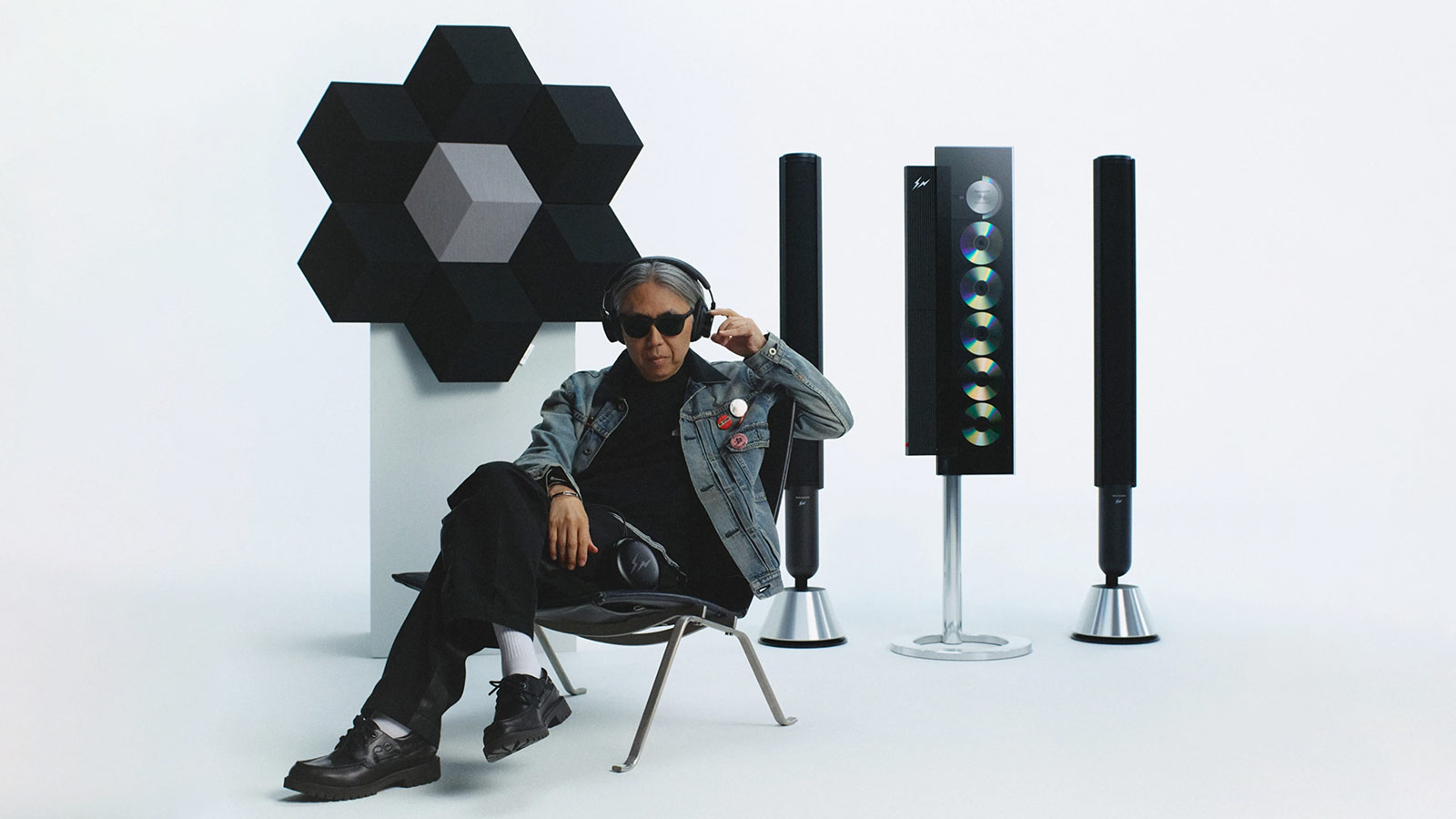
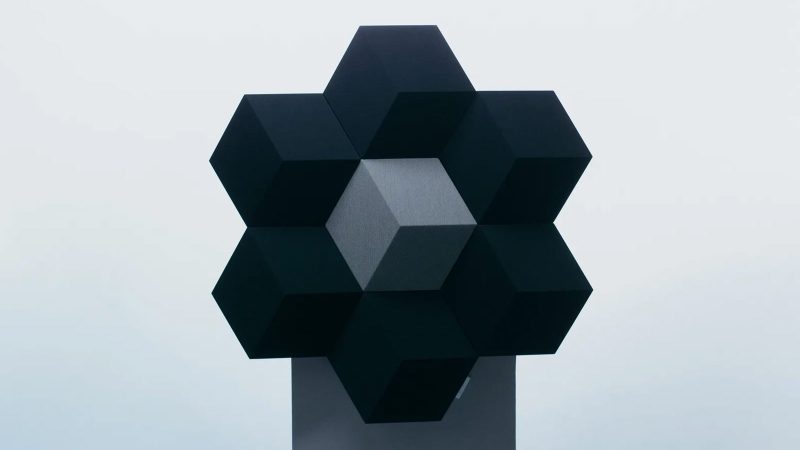
Bang & Olufsen has partnered with Hiroshi Fujiwara’s Fragment Design for a limited-edition collection that trades the Danish audio company’s usual warm aluminum palette for an unexpectedly dark and restrained aesthetic. The collaboration spans four products — the Beosound A1 portable speaker, Beoplay H100 headphones, Beosound Shape wall speaker system, and the Japan-exclusive Beosystem 9000c — each reworked in glossy black finishes that feel more architectural than decorative.
The standout element is the finish itself. Bang & Olufsen says the collection uses a specialized anodization and polishing process not previously applied to its products, producing a “liquid black” appearance that shifts subtly depending on light. Fragment’s signature double lightning-bolt logo appears discreetly throughout the collection, avoiding the oversized branding that often undermines collaborations of this sort.
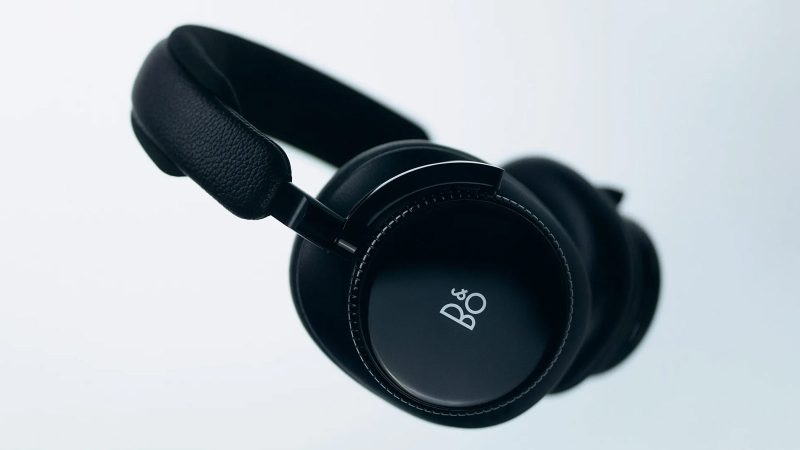
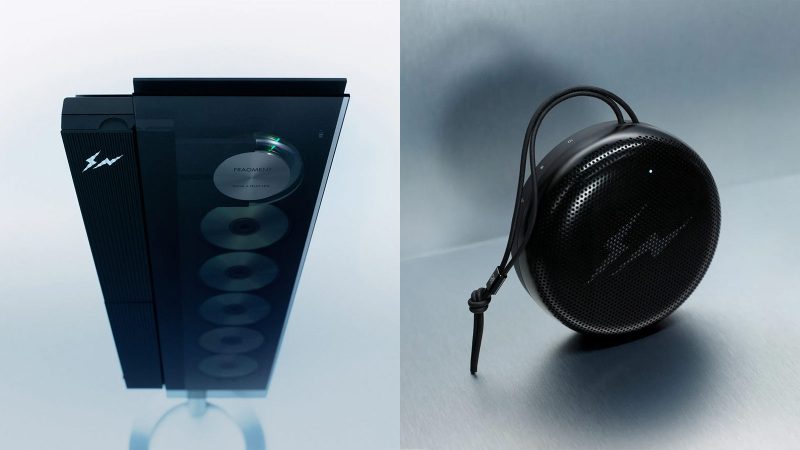
The Beoplay H100 headphones arguably benefit the most from the treatment. Their softened geometric form and darkened aluminum surfaces lean into the understated luxury Bang & Olufsen historically handled well before much of the consumer electronics market drifted toward louder visual language. The Beosound A1 similarly gains a more sculptural presence, with the monochrome palette emphasizing its perforated aluminum shell and compact proportions.
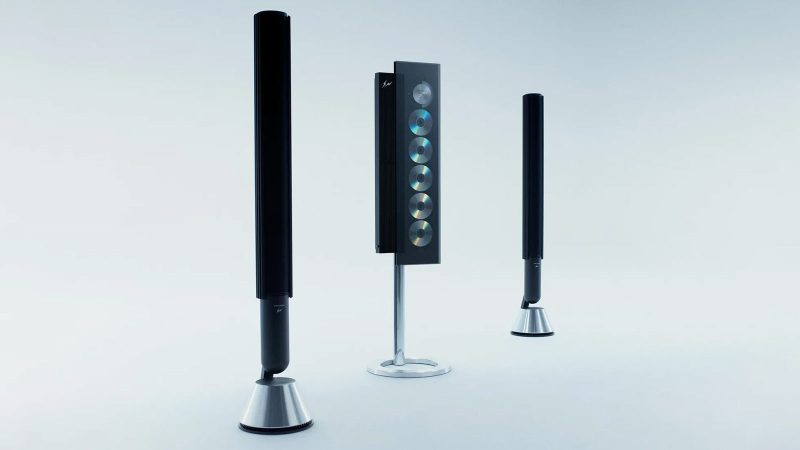
The most ambitious piece is the Beosystem 9000c, which pairs a restored Beosound 9000 CD player with Beolab 28 speakers. Originally introduced in the 1990s, the vertically mounted CD system remains one of Bang & Olufsen’s most iconic industrial designs, and the collaboration wisely leaves its dramatic silhouette untouched. Instead, the black finish gives the system a more contemporary presence without turning it into nostalgia bait.
The collection launches first through a Tokyo pop-up at Isetan Shinjuku before expanding globally beginning June 3. Prices range from roughly $475 for the portable speaker to nearly $70,000 for the Beosystem 9000c. Unsurprisingly, scarcity is part of the appeal, though the collaboration works best when viewed less as hype-driven fashion merchandise and more as an exercise in restraint. In a market crowded with aggressively styled tech products, the decision to simply make iconic objects quieter feels oddly refreshing.



![[2] CLOT x fragment design x Nike Dunk Low](https://imboldn.com/wp-content/uploads/2023/05/CLOT-x-fragment-design-x-Nike-Dunk-Low-main-480x270.jpg)