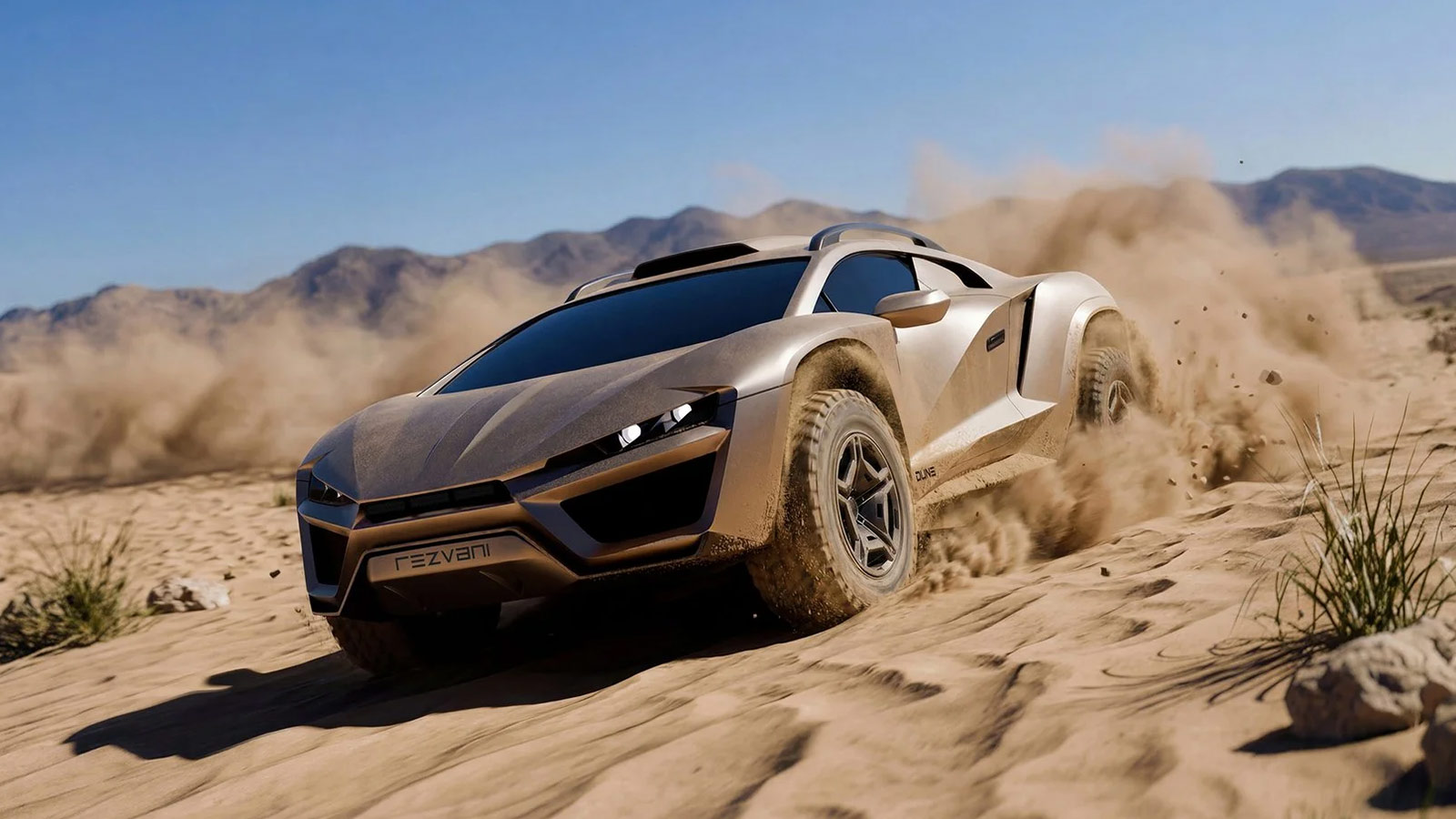
Most lifted supercars stop at the photograph. The Rezvani Dune is engineered to keep going, trading a low nose and polished pavement for skid plates, recovery points, and enough clearance to make a desert line plausible.
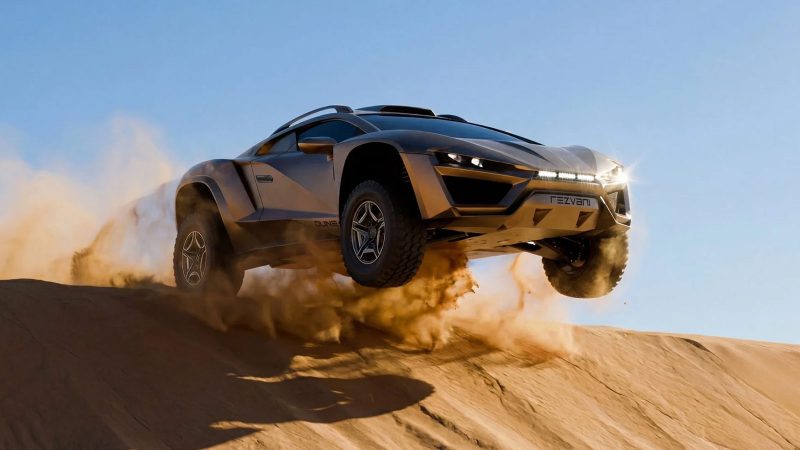
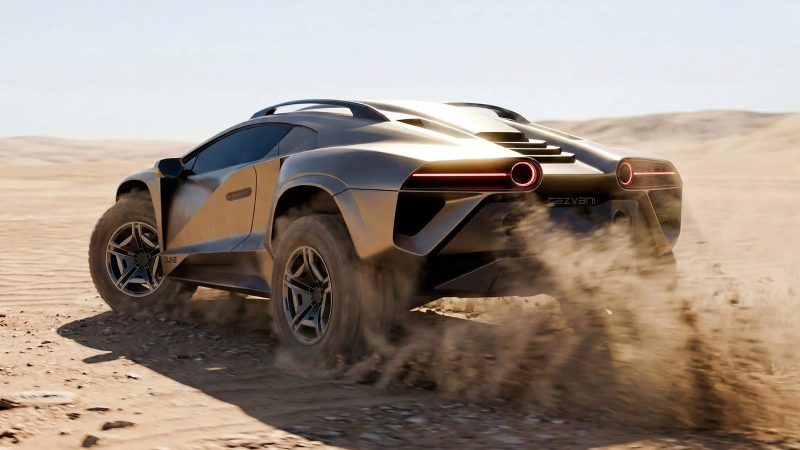
Its foundation is a Lamborghini Huracán, but little of the original stance remains. Rezvani raises the chassis 4.5 inches, yielding 11 inches of ground clearance, then fits 31-inch mud-terrain tires on 20-inch wheels. The carbon-fiber body spans 88 inches, with a 25-degree approach angle and 35-degree departure angle. A snorkel, front and rear skid plates, and integrated recovery hooks are functional evidence rather than safari-themed garnish.
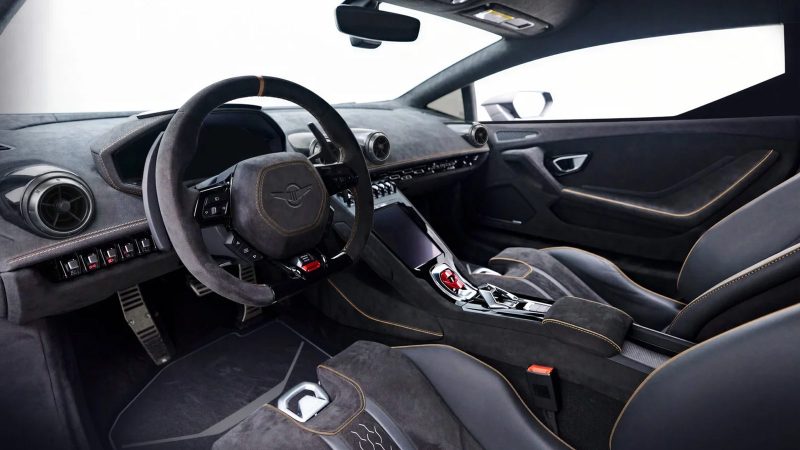
The 5.2-liter supercharged V10 produces 800 horsepower and 785 lb-ft of torque, routed through a seven-speed dual-clutch transmission and full-time all-wheel drive. A proprietary suspension developed with VF Engineering carries the increased ride height. Compared with the Huracán Sterrato, Dune pushes the off-road-supercar idea past factory restraint and into low-volume coachbuilding.
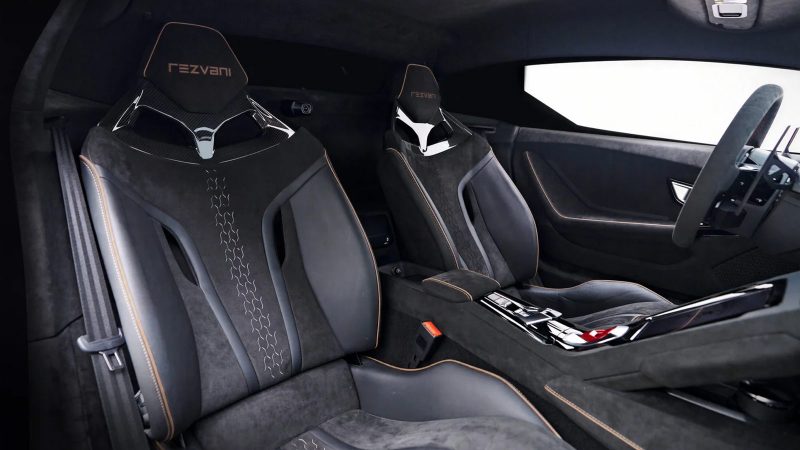
Its seven-unit production run also allows each cabin and exterior specification to be resolved as an individual build.
Rezvani will build only seven examples. A $1,500 deposit reserves a production slot, while final pricing, build timing, and individual specifications are supplied through the company.