Natural stone dials often amount to decoration. The Chronoswiss Small Second Stone Collection gives them a biographical role, using German jasper and Swiss serpentine to connect the brand’s Munich origins with its present home in Lucerne.
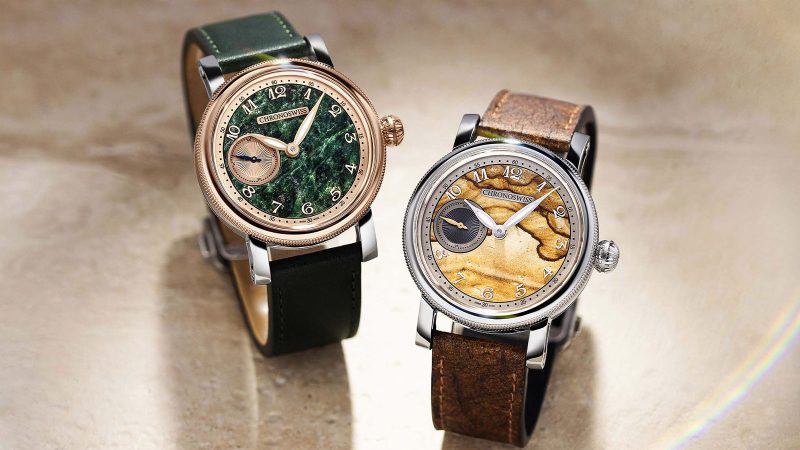
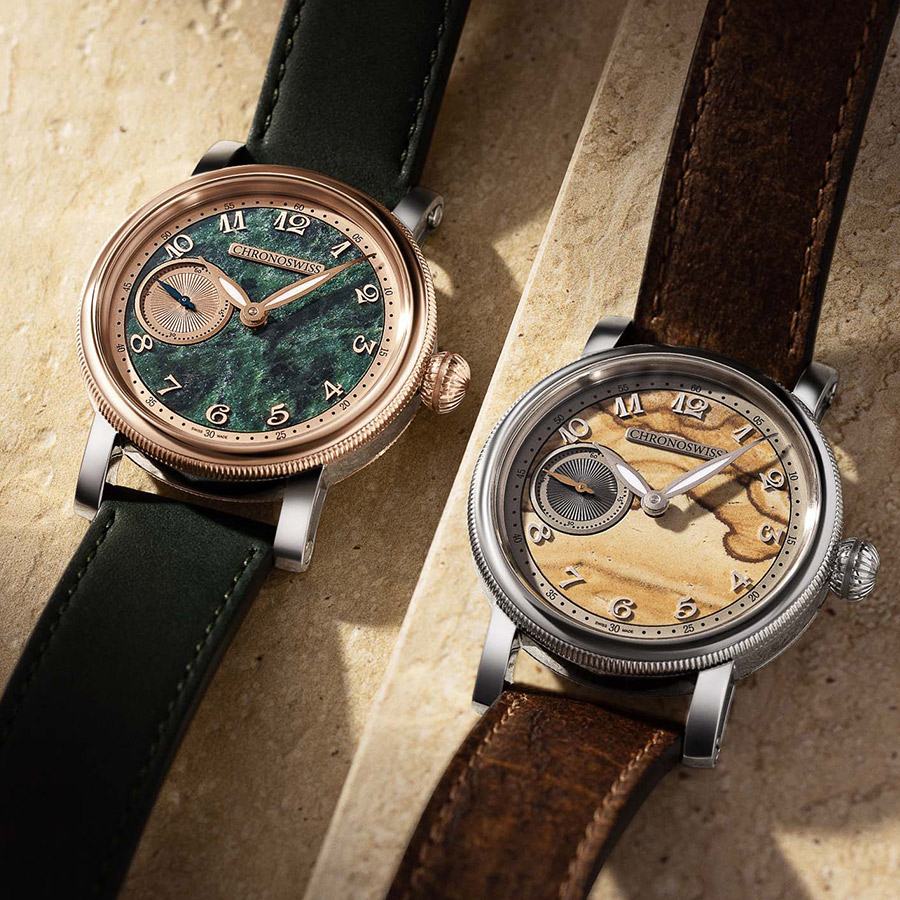
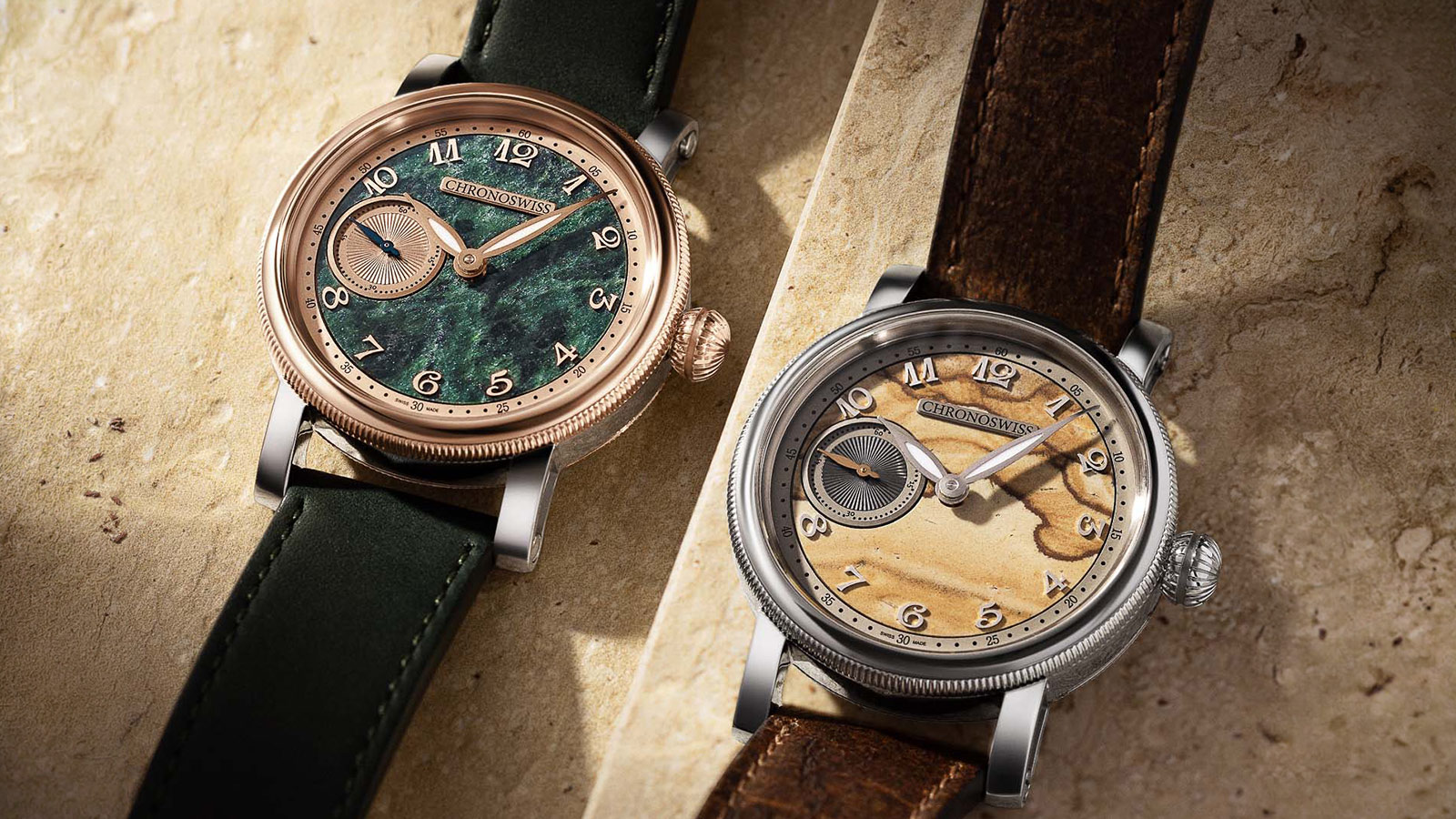
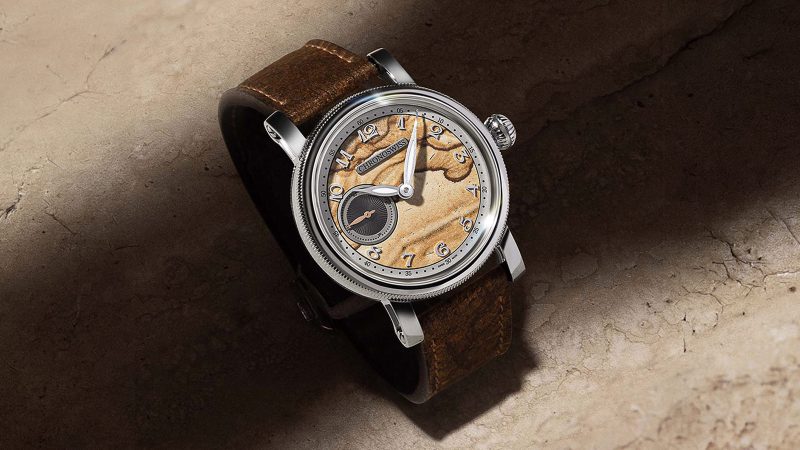
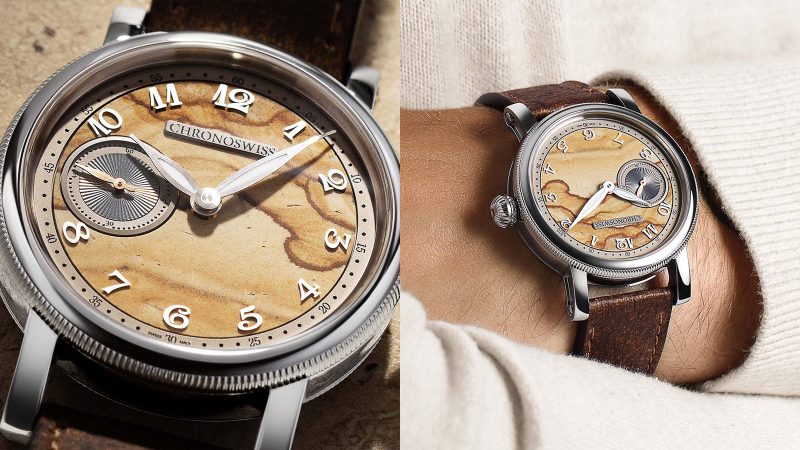
The collection marks the first use of natural stone dials in Chronoswiss’s Modern Mechanical era. Jasper sourced from Idar-Oberstein, Germany, gives one reference its matte landscape of beige, brown, and ivory, framed by a stainless-steel case and a brown stone-dusted leather strap. The Small Second Serpentine uses polished green stone from the Zermatt region, paired with a two-tone stainless-steel and 18-karat red-gold case and green leather strap. Because the minerals’ veins, inclusions, and colors vary naturally, no two dials are identical.
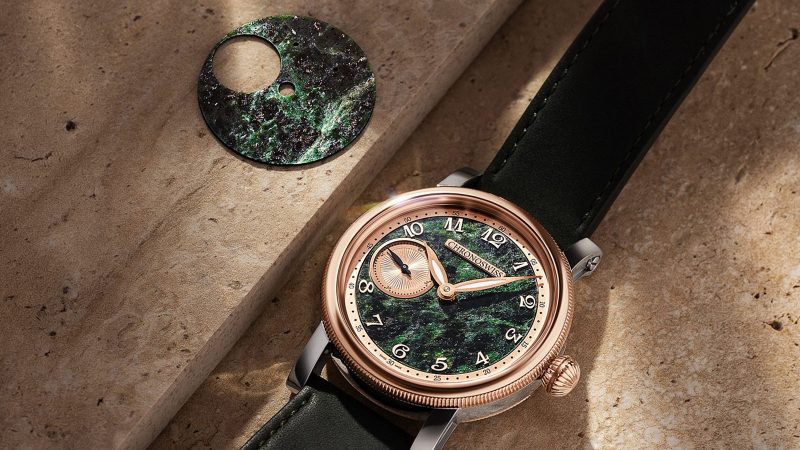
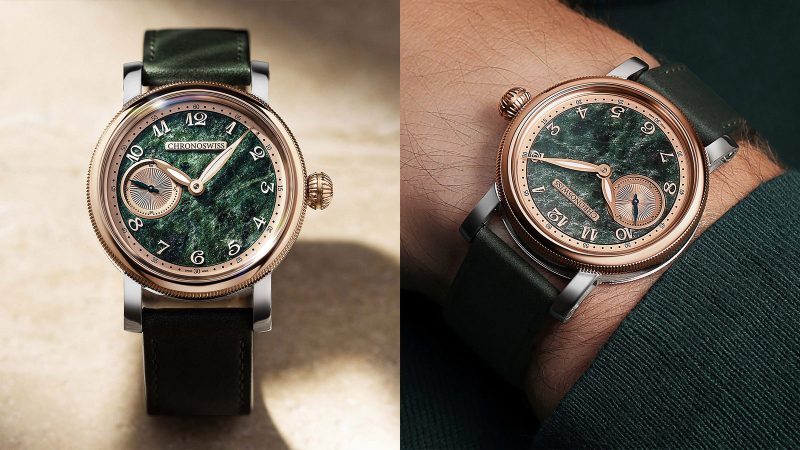
Both watches place a hand-guilloché small-seconds register at 9 o’clock, allowing most of the stone to remain uninterrupted. Their 17-part cases measure 40mm across, 11.5mm thick, and 50mm from lug to lug. A fluted bezel, onion crown, domed double-antireflective sapphire crystal, and 30 meters of water resistance retain familiar Chronoswiss architecture.
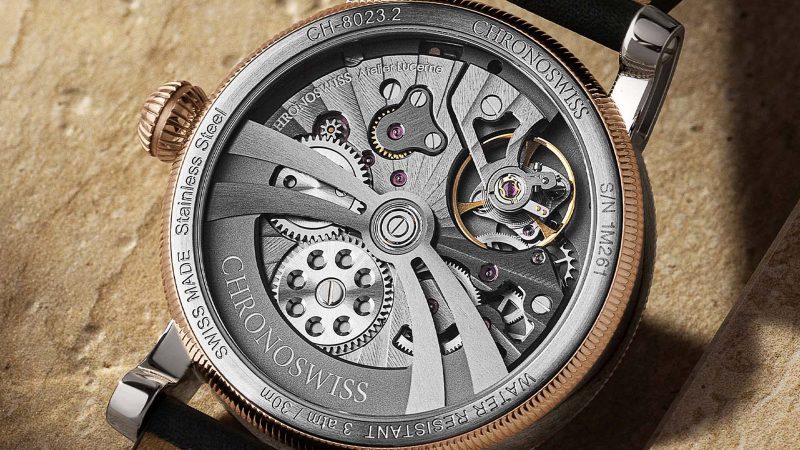
The automatic C.6000 manufacture caliber operates at 4 Hz and provides approximately 55 hours of power reserve. Its skeletonized tungsten rotor and ruthenium-plated bridges with radiating Geneva stripes are visible through the sapphire caseback. The restrained display makes this a quieter proposition than the brand’s retrograde watches, though the multipart construction remains unmistakably Chronoswiss.
Limited to 50 pieces per reference, the Small Second Jasper costs $13,900, while the Small Second Serpentine is priced at $21,300. Chronoswiss is currently accepting reservations through its website, with deliveries scheduled according to its phased production process.