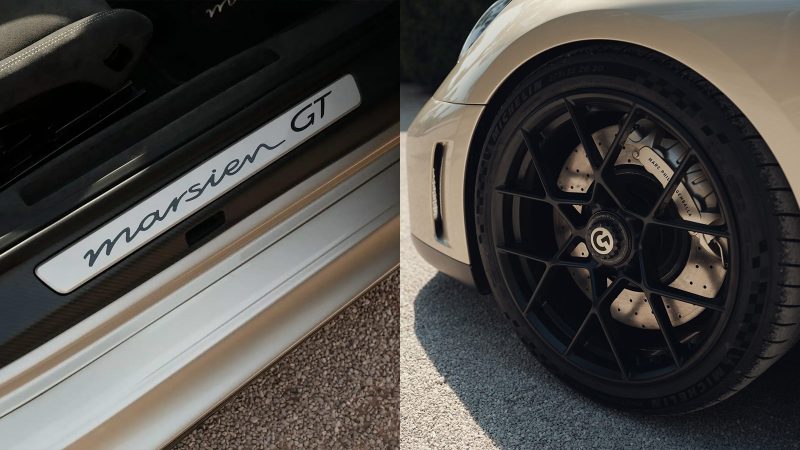
The original Marsien gave a Porsche 911 Turbo S the ground clearance and suspension travel to cross a desert. Marc Philipp Gemballa’s new Marsien GT) redirects that same idea toward asphalt, pairing its 959-influenced shape with a lower, lighter, road-focused chassis.
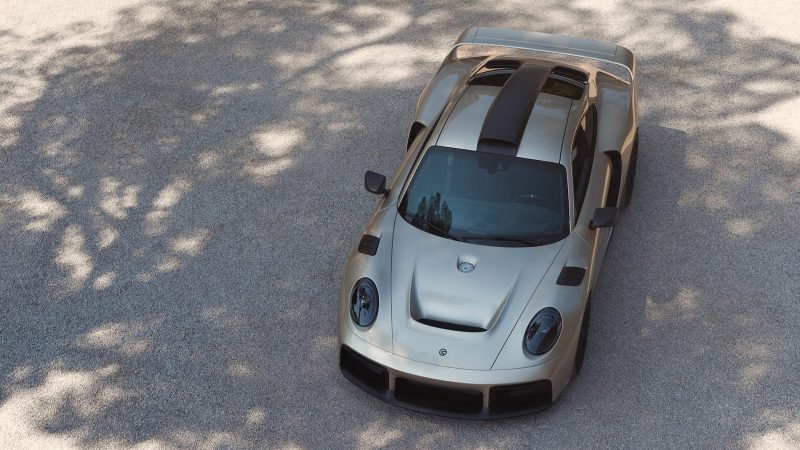

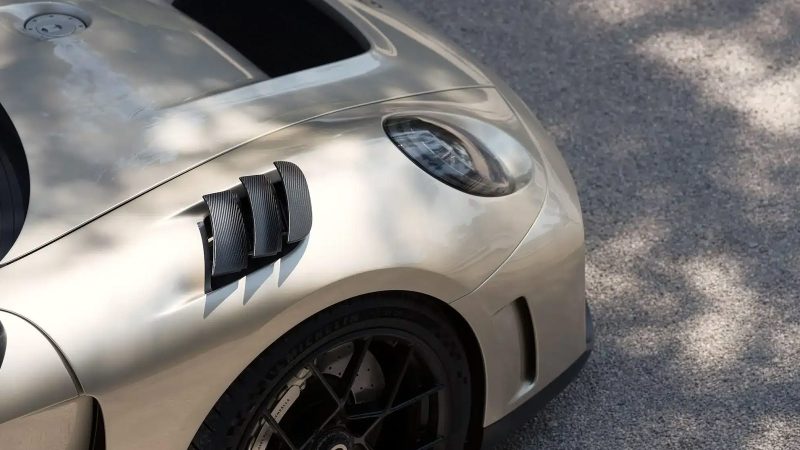
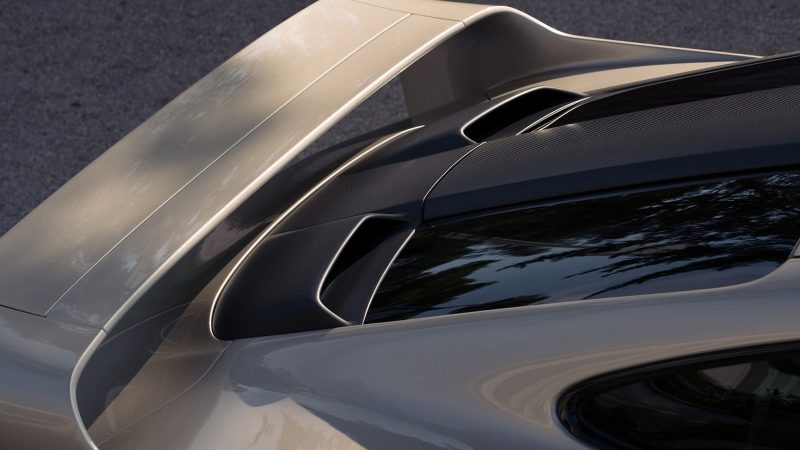
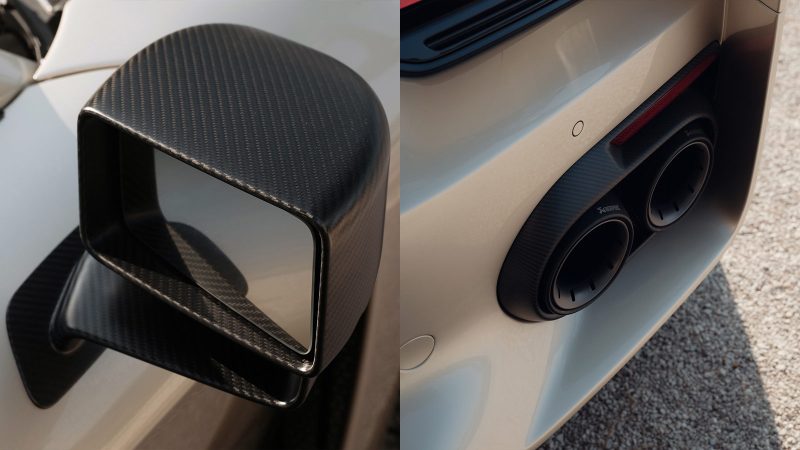
Each car begins with a 992-generation Porsche 911 Turbo S before receiving approximately 1,500 newly engineered and manufactured components. Its exterior comprises more than 100 carbon-fiber pieces, including a full underbody, active front-fender louvers, roof-mounted ram-air intake, and active rear wing. The transformation removes approximately 165 pounds compared with the standard donor car.
A bespoke double-wishbone front suspension works with the GT’s retained multi-link rear layout and KW DDC V5-based electronically controlled dampers. Separate electromagnetic valves adjust compression and rebound independently, responding to changing conditions within 20 milliseconds. Standard ground clearance measures just under four inches, while a front-axle lift adds 2.36 inches when needed.
RUF upgrades the 3.7-liter twin-turbo flat-six to produce more than 830 hp and 686 lb-ft of torque. An optional second-stage package exceeding 900 hp remains in development.
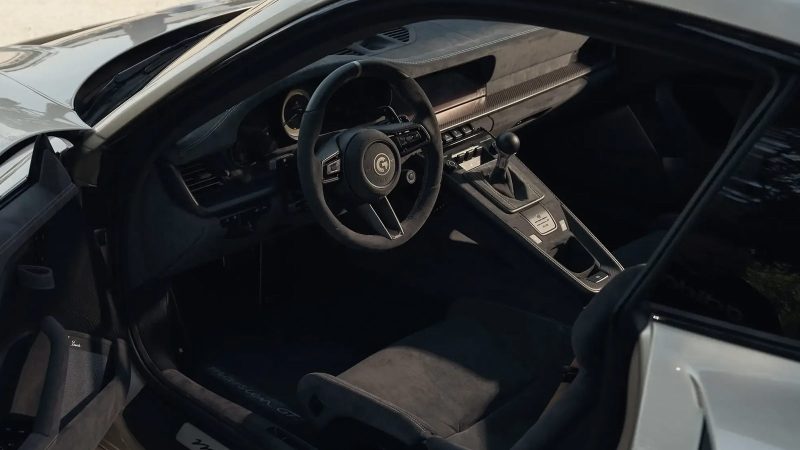
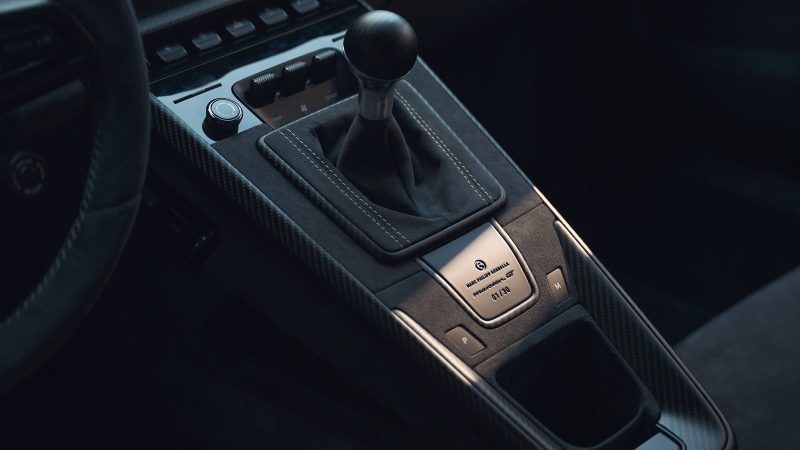
Porsche’s eight-speed PDK and modified all-wheel-drive system help deliver a claimed 0–60-mph time of 2.4 seconds and a 205-mph maximum speed, figures that place the car firmly in modern restomod territory rather than lifted-supercar novelty. A titanium Akrapovič quad exhaust completes the powertrain package.
Production is limited to 30 individually commissioned cars, with first deliveries planned for the end of 2027. Pricing starts at €770,000 before taxes, options, shipping, and the required Porsche 911 Turbo S donor.