Ferrari has never treated the interior as mere decoration. With the upcoming EV Luce, the marque formalizes that philosophy into a named design language, revealing a new interior interface concept that reframes how drivers interact with performance cars.
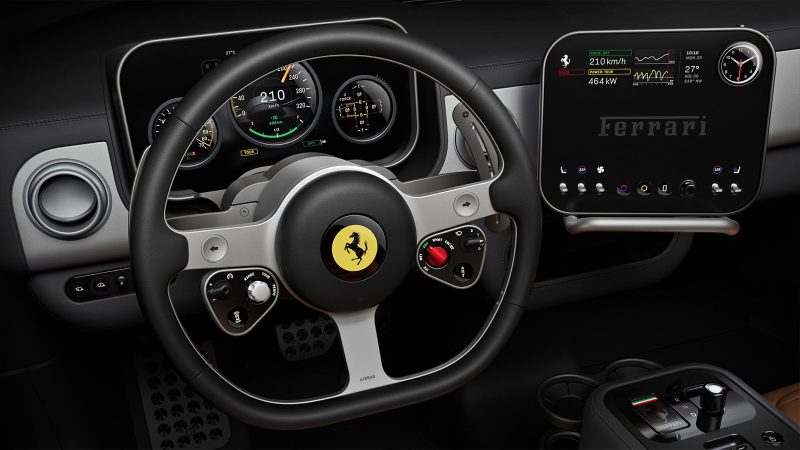
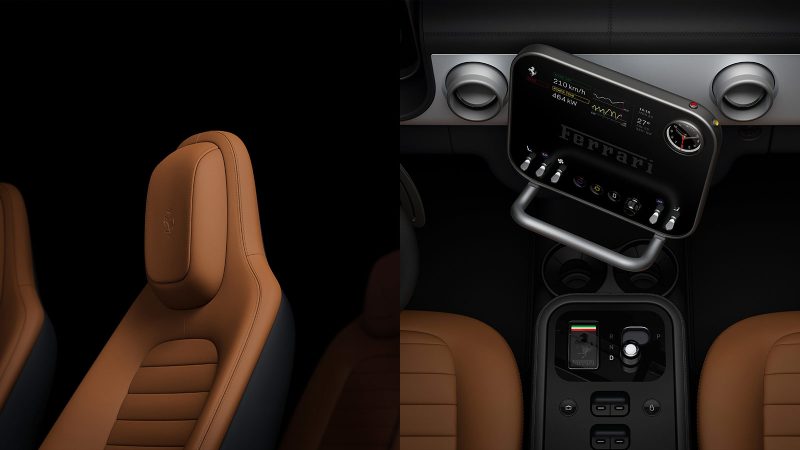
Rather than chasing larger screens or theatrical lighting, Luce focuses on reduction and intent. Physical controls return with clear hierarchy, designed to be located by touch rather than sight. The interface emphasizes muscle memory, acknowledging that a Ferrari is driven at speed, not scrolled through. Fans of Apple products will find the experience familiar as Ferrari has tapped ex-Apple design boss Jony Ive to tailor the design and experience of the Luce’s interior.
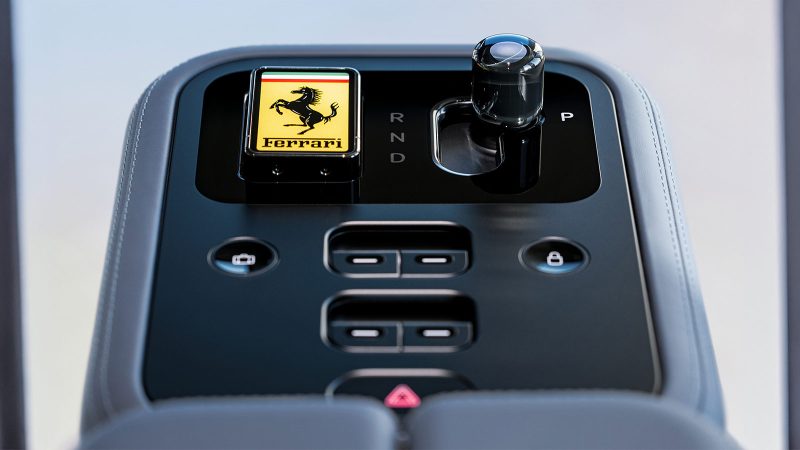
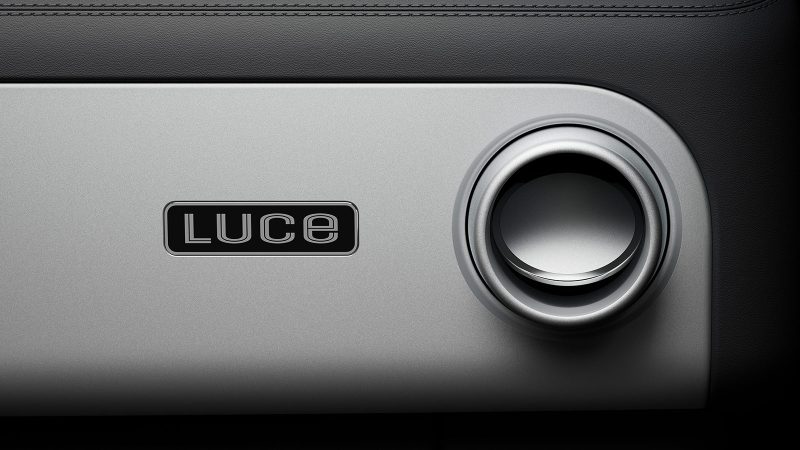
Materials play a central role. Ferrari highlights aluminum, carbon fiber, and carefully finished surfaces that communicate function through texture. Controls are shaped to guide the hand naturally, minimizing distraction while reinforcing the mechanical honesty long associated with the brand.
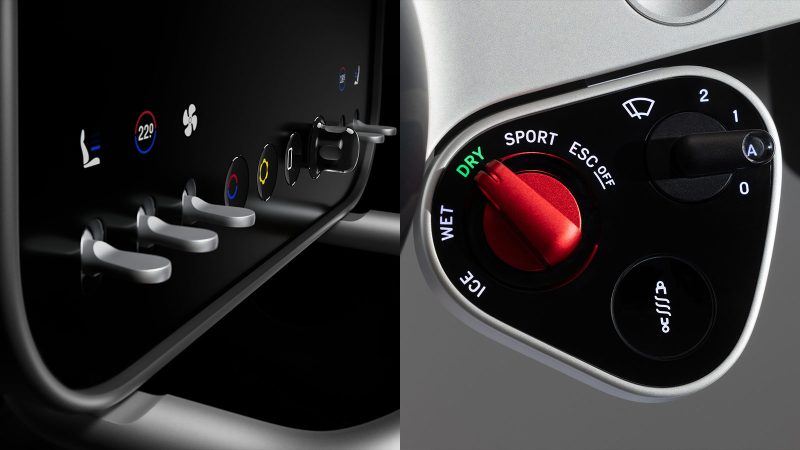
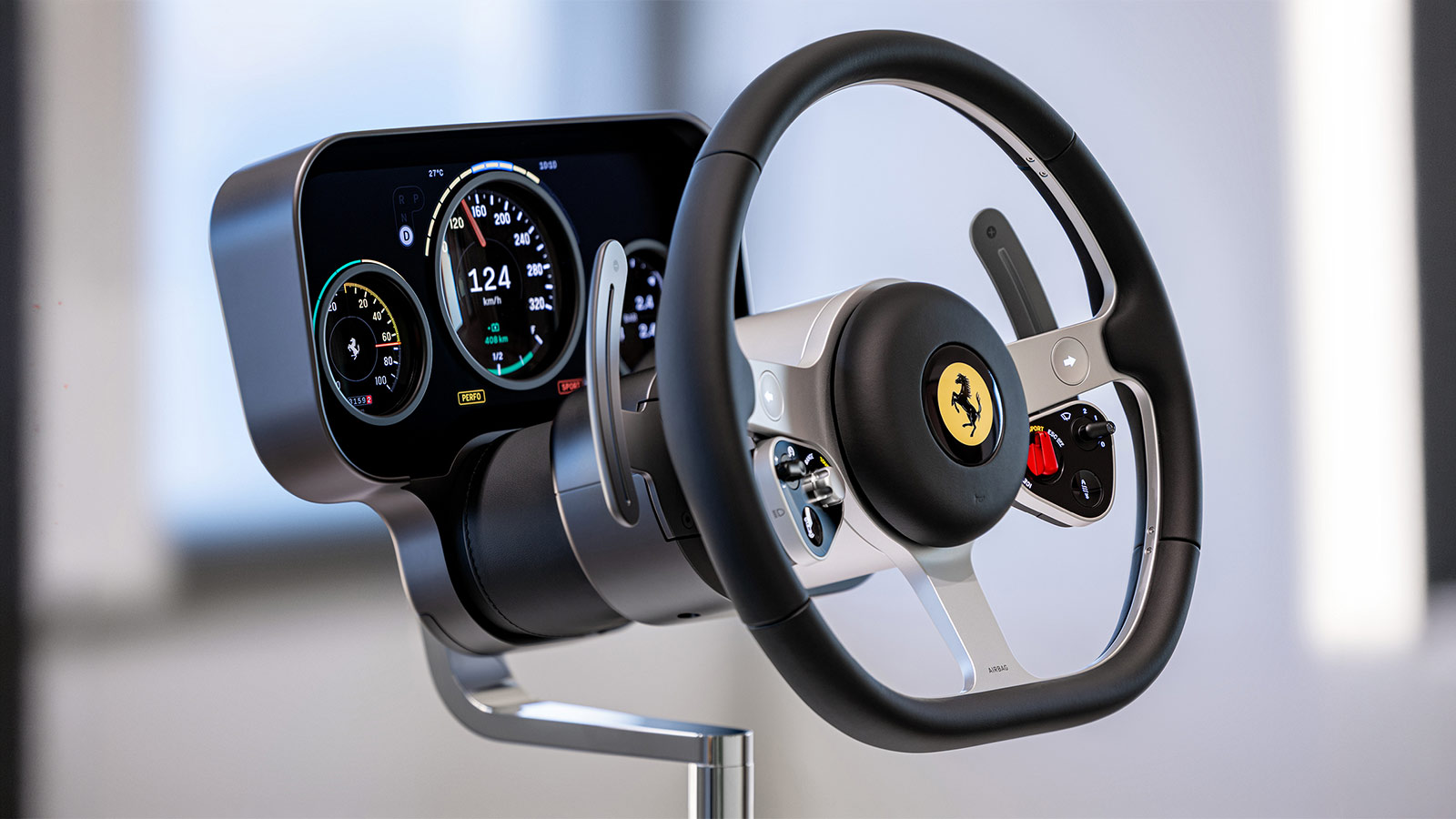
The steering wheel remains the command center, but Luce refines its logic. Inputs are reorganized for clarity, with tactile differentiation replacing visual overload. The result is an interface that feels quieter, even as performance remains extreme.
Luce is not positioned as a one-off concept. Ferrari frames it as a foundational system that will inform future models, suggesting a long-term shift away from screen-dominated interiors toward something more deliberate.
In an industry racing toward digital excess, Ferrari’s move reads as a confident counterpoint: less spectacle, more control.