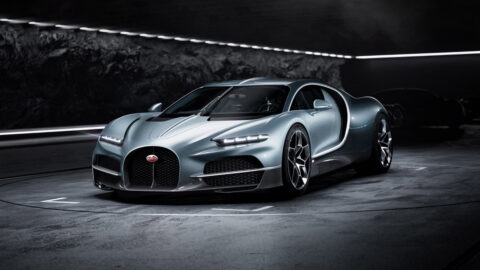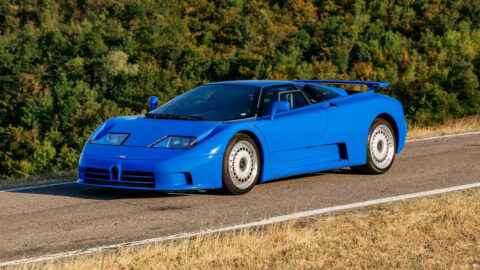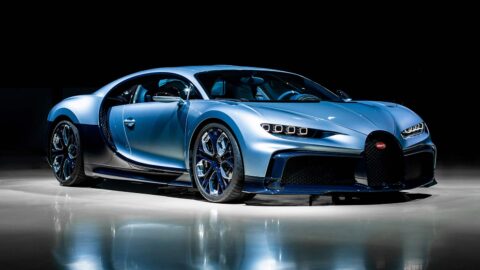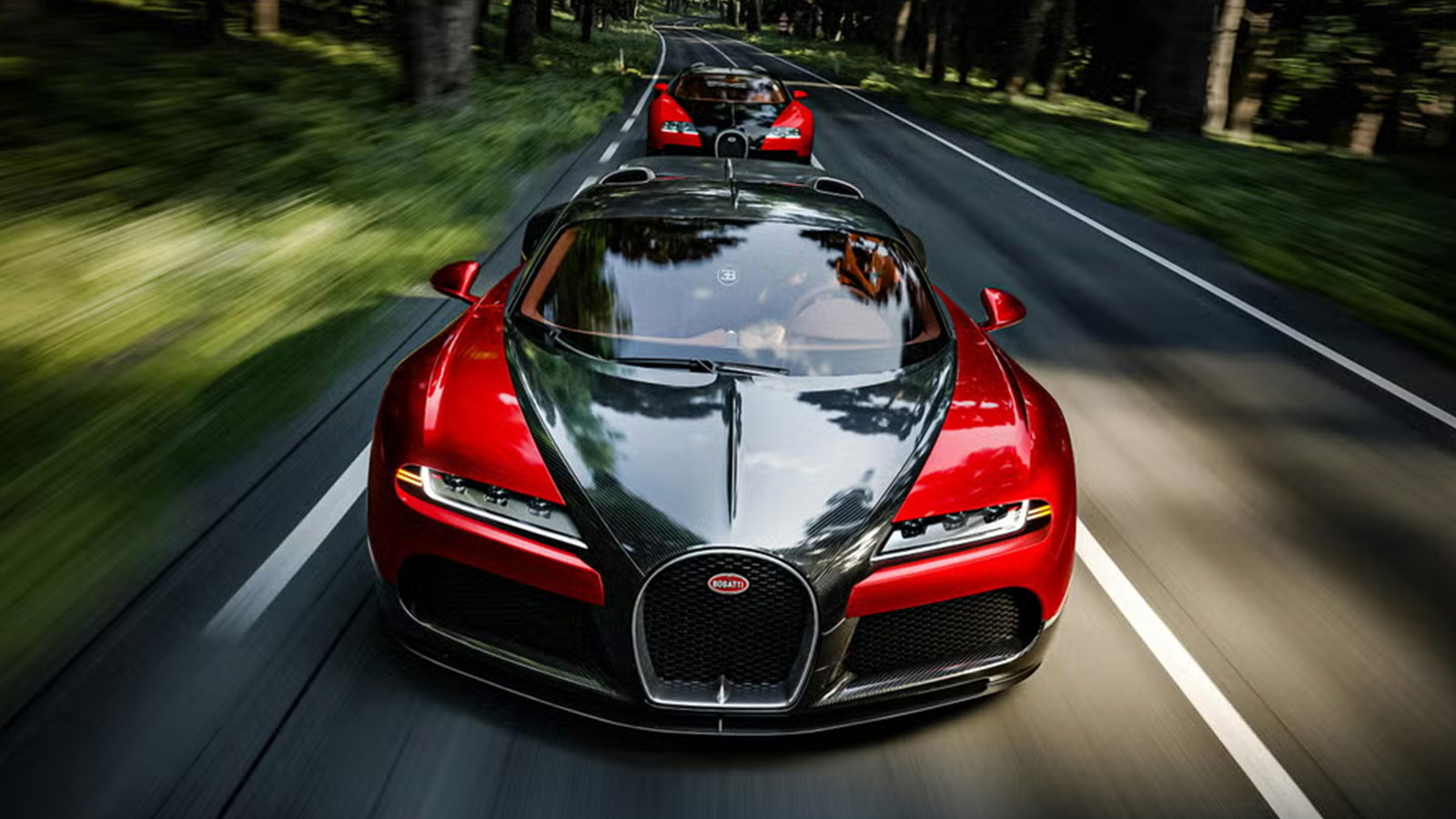
Some cars don’t just move the industry forward—they redraw its boundaries. When the Bugatti Veyron debuted in the mid-2000s, it didn’t simply become the world’s fastest production car; it rewrote the rules of what a road-legal automobile could be. Two decades later, Bugatti is looking back—not nostalgically, but deliberately—with the unveiling of the FKP Hommage, a one-off design study honoring the Veyron and the man who made it possible.
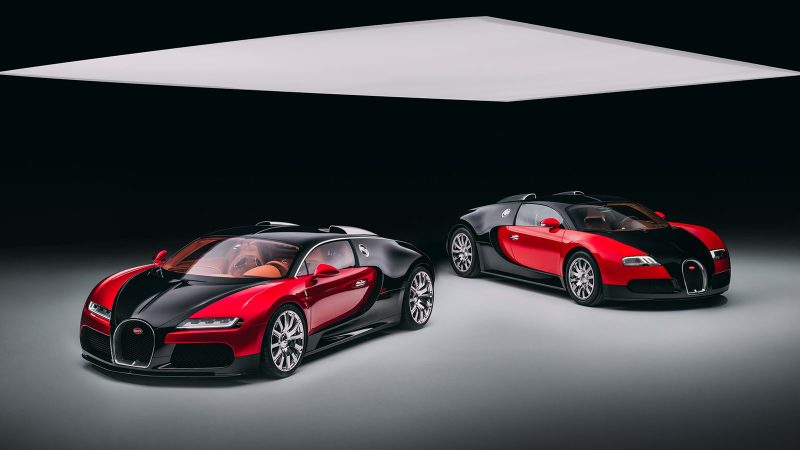
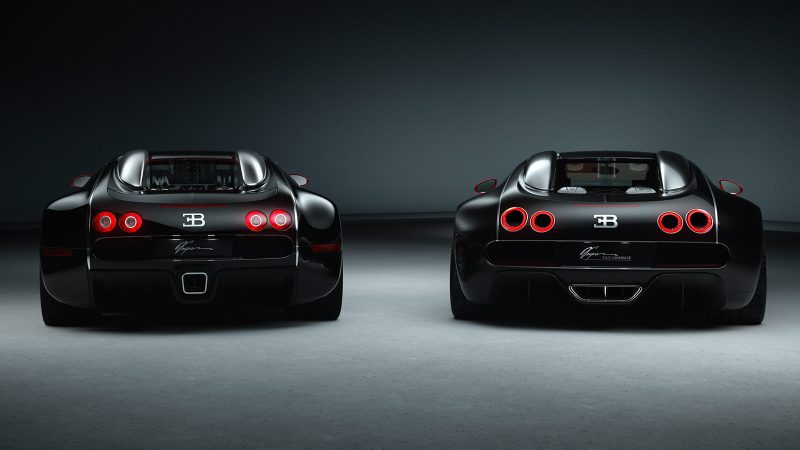
Named after Ferdinand Piëch, the former Volkswagen Group chairman whose uncompromising vision resurrected Bugatti and green-lit the Veyron, the FKP Hommage is less about performance figures and more about philosophical continuity. It reflects the values that defined the original project: engineering absolutism, aesthetic restraint, and an almost obsessive refusal to accept “impossible” as an answer.
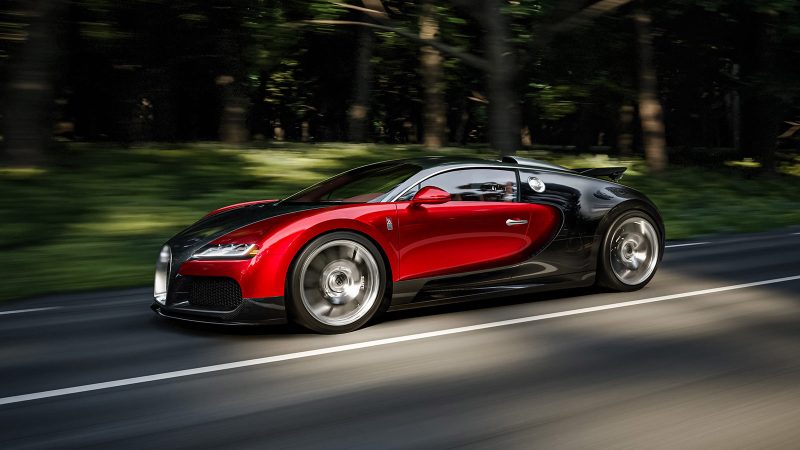
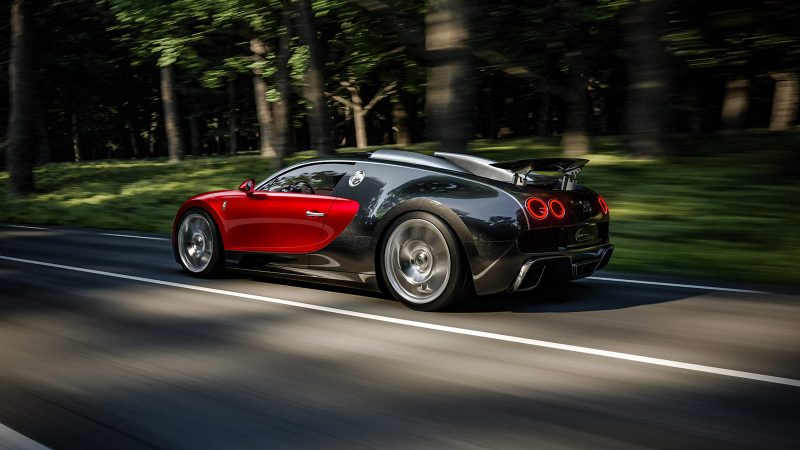
Visually, the FKP Hommage distills familiar Bugatti cues into a more conceptual form. The iconic horseshoe grille, pronounced centerline, and clean, tensioned surfaces reference the Bugatti Veyron without replicating it outright. Instead, the design reads as a conversation between eras—past ambition translated through modern proportions and contemporary minimalism.
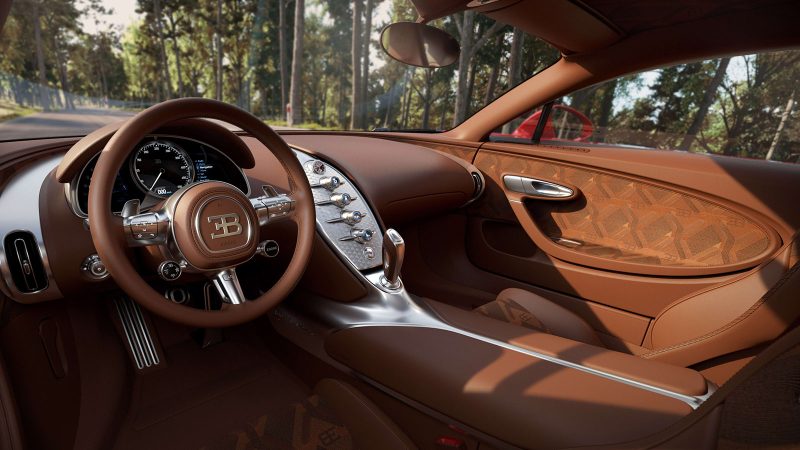
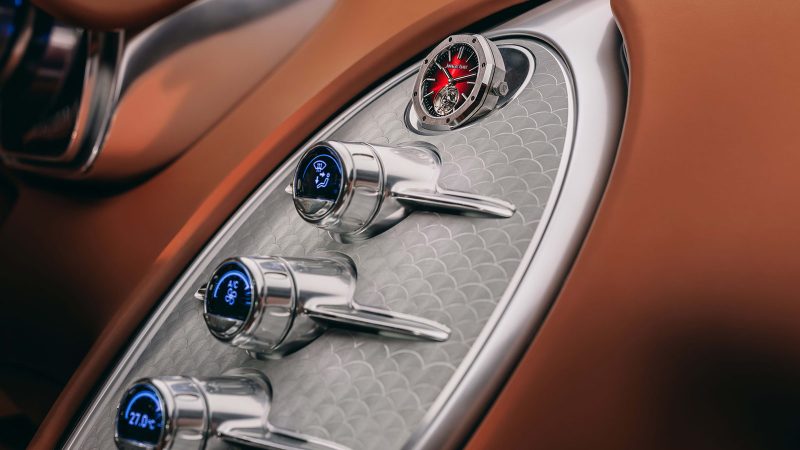
Inside, the concept continues this ethos. The cabin is intentionally pared back, prioritizing architectural clarity over ornamentation. Materials are used sparingly but purposefully, reinforcing the idea that true luxury lies in precision and intent rather than excess.
Bugatti positions the FKP Hommage not as a preview of a production model, but as a moment of reflection. In an era increasingly defined by electrification and digital interfaces, the concept serves as a reminder of the mindset that built the Veyron: one driven by human conviction as much as technical capability.
As a design statement, the FKP Hommage doesn’t attempt to eclipse the Veyron’s legacy. Instead, it acknowledges that some achievements are so foundational they deserve to be honored—not repeated. In doing so, Bugatti reinforces its identity as a marque shaped as much by visionaries as by machines.